On March 2nd, I departed Australia for a six week tour in the United States of America. I spent three days in LA, two weeks in San Francisco, a week in Austin, three days in Boston, a week in New York, a week in Miami, and a weekend in Vegas. Sadly, I’m writing this at the airport for my flight back to Sydney.
It was part vacation and part career development. The two weeks with my three best friends from Australia partying with me in New York, Miami and Vegas was an experience in itself. But that wasn’t the catalyst for this trip: I knew all these people in the industry but had never actually met them. I ended up getting a lot more than I bargained for.
Rather than self-indulgently recount my trip here and views of this amazing country, I thought I would do something more useful. Below I highlight some cool people I met, who you should aim to meet one day. Meeting quality people is not an easy thing – I’ve now got 15 you can hunt down and stalk.
There are certainly a lot more people I want to mention, but for the sake of your attention span and my limited battery at the airport, here are a few. They are in my eyes, all people to watch – some are just starting out, other’s are well established. But either way, there was something that made me click when I spoke to these people.
Best workaholic: Brady Brim DeForest
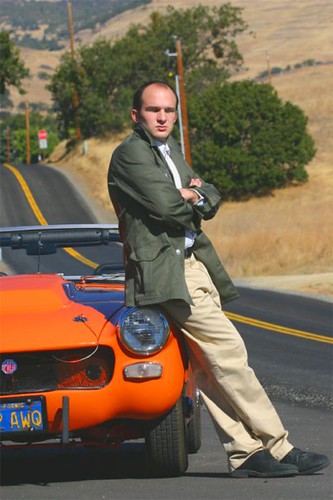
The workaholic tag is not something I drop on someone lightly because I am one of the biggest workaholics I know. But Brady redefines the word, and the fact he limits his sleep to only a few hours to get it all done, is proof. I’ve been working with Brady for a year on various things, but only met him for the first time now.
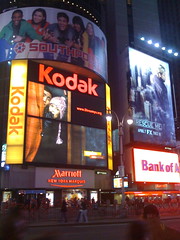 Looking at all the projects he is involved with gives you an understanding why he’s so impressive. Things as diverse as owning an art gallery, being a judge for the Oscars, lobbying for sustainable food practices, and have founded multiple efforts in technology that have made him wealthy in all senses of the word. For example, Kodak has an ad boasting that they were a sponsor of the Streamy’s on Times Square – a thing Brady started this year. He is 25, and he has more experience than people twice his age.
Biggest change agent: David Recordon
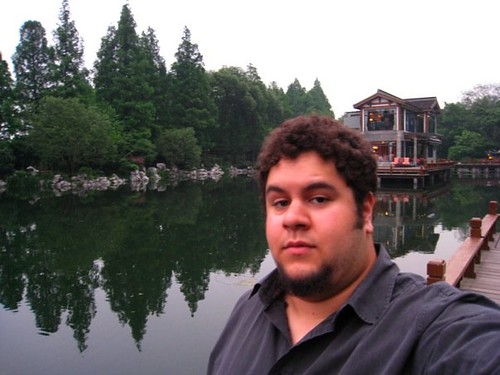
I’ve come across Dave a lot because things I work on in the DataPortabiliy Project overlaps with what he does. We had never actually interacted, but we knew each other existed from afar. But what blew me away was actually meeting him and getting an insight into his personality.
Dave is influencing the future of the web more than anyone else on this list…and yet he is only 23. I feel inspired to know that people are creating a better future that you don’t even know about; are passionate – and for the right reasons. I know enough about Dave because of his open source reputation in the industry: but I only recently found out about his attitude. Which is why he is on this list.
Biggest wise guy: Steve Greenberg

Steve has become one of my mentors in life, where we have spent hours arguing about things, and him telling me how I need to evolve with my future. He’s the main reason I did this trip, but the ironic thing is that we had never met up until now. I don’t need to talk up Steve – the fact I regard him a mentor to influence me, should communicate more than you need to know.
Most successful person I knew but didn’t know that I got to know: Naval Ravikant
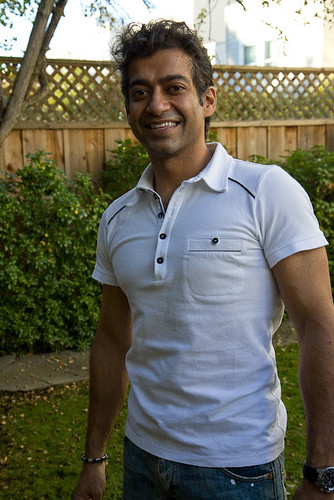
Quite randomly, I ended up meeting and getting drunk with Naval, having some of the best food in San Francisco (thanks mate!). The funny thing is, I had no idea who he was (I thought he was just a friend of Steve’s), but after I checked him up, I realised I had spent an evening with one of the bigger people in the industry.
For example, in Australian tech circles, Venturehacks is considered one of the top blogs for entrepreneurs to track. I knew Venturehacks. But I didn’t know Naval was the person behind it!
He has started 15 companies before (and is he still only in his thirties). And I’m not talking about some little venture that put’s up a pretty website and that’s it – but the kind that make the headlines in technology. Like Epinions – one of the hottest company acquisitions in recent years. He has phenomenal investments in companies like Twitter and Vast – the former considered the hottest company in the industry and the latter what I think is the hottest company in the industry (but that nobody realises yet…sorry, can’t say why I think that).
Best thinker: Jonathan Vanasco
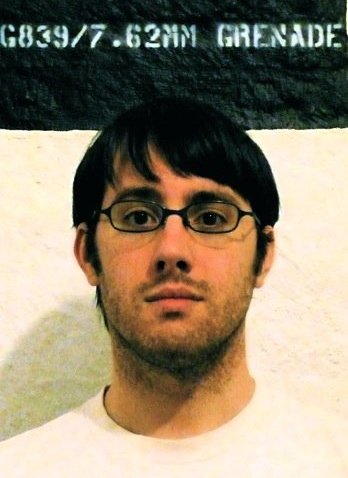
Jonathan is an entrepreneur from New York that I’ve talked with before and finally met recently for the first time. The guy is whip-smart, done a lot, and level headed. I learned more from an evening with Jonathan than I did in a semester at university. He’s probably spending a bit too much time on lawsuits with Google, but seriously, is a brilliant mind. Nothing more needs to be said.
Best ‘holy-crap-dude-I didn’t-realise-you-had-achieved-that-much-in-your-life’: Steve Repetti
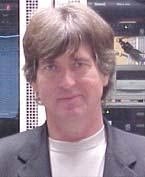
Steve’s another guy I’ve worked with a lot in the last year, but had never met or actually knew that well. We caught up in between my hangovers in Miami, and I honestly was floored by what he has done and is doing. He’s successfully started and run companies – validated by the wealth he now has. He’s worked in a variety of roles, including being CTO of listed companies to running virtual corporations.
Understanding his history, how he recreated his life, and how he thinks about the future with his company is why I’ve added him here. The guy is brilliant. And I can’t believe after knowing him for so long, I only realised that once we had a beer. Hold on – no that sounds right – beer is the solution to everything.
Best drunk conversation: Gabe Rivera
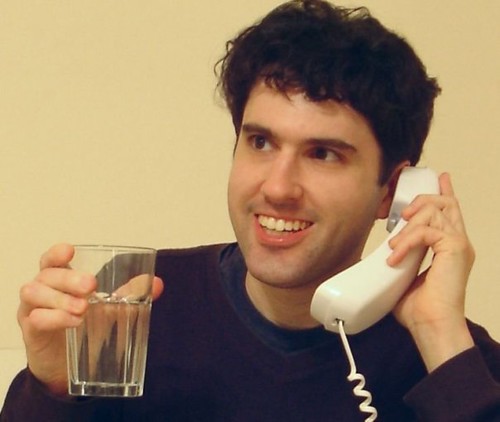
Speaking of beer, I challenged Gabe to drinking with Aussies at SXSW, but we never ended up meeting. And then we ended up getting both invited to an Aussie party in San Francisco, which he dropped by to follow up on my challenge. We had a great chat, and I got some really good insight into things by Gabe. And it might have been just one drunk conversation over a few hours, but it was enough to make me realise how he thinks and what he’s passionate about.
Ok, so what? Well Gabe was recognised by Time magazine as one of the 25 most influential people on the WebBest sober conversation: Devin Holloway
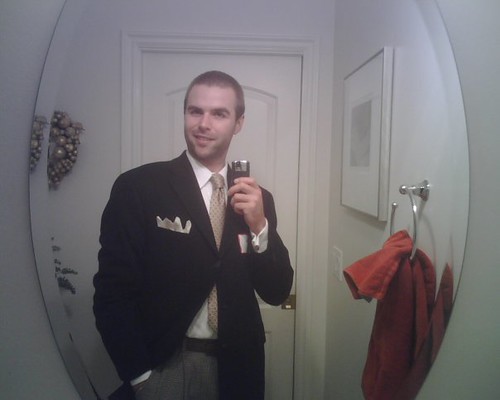
Devin is someone I would regularly talk to on the phone about…the future. I know, it sounds a bit random, but we did and holy crap we came up with some cool ideas. We came across each other a year ago, found we had similar thoughts about things, and we’ve since kept in touch because we challenge each other and think about things.
And yes, we finally met! With a background in sales, Devin is another guy in his 20s that’s getting broad experience and will be the type of guy that people wonder how do successful executives like that get made.
Best lunch conversation: Bill Washburn
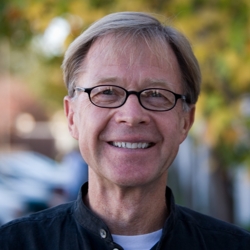
I randomly sat next to Bill at a lunch, and had an amazing chat about the industry. He’s had a very distinguished background in technology both in education and private practice, and he oozed with wisdom about things. He gave me perspective on things that I’ve spent months trying to work out!
Yes, there is a trend here: I’ve listed people who I consider highly intelligent, motivated, and experienced. There is actually another dozen people I want to include, but it’s time we end the procession of males and now highlight women who are under-recognised.
The women
A disappointing thing is that a lot of the celebrated women in the industry are the equivalent of celebrity bimbos – they are celebrated more for their social media status and MySpace pose avatars than any contributions that drive the industry. I want to see less talk about "where are the women" and more talk about "look what these women did".
So I am going to do better. The below women are attractive enough to beat any social media bimbo celebrated in the industry. But they also have brains. And I got to know them well enough, that I think other people should know them as well. There needs to be more role models, mentoring, and promoting of women in tech – start with the women below if you’re looking for some.
My new big sister: Daniela Barbosa

This is a picture of Daniela when she was a child star in Portugal. Hidden in a box in her house. Whoops…
I first met Daniela through the APML workgroup, and have worked very closely with her on the DataPortability Project. So it’s not fair to say I only just met her, but I stayed with her and her dude of a husband for a while, enough to make me realise a more complete side to her.
Daniela is a genuine leader in the industry, with a prominent role in a large enterprise (not so much in title, but internal influence which is very evident) and an advocate for some of the main trends coming to light (like the attention economy and the data web). As a trained librarian, this whole information sector thing is fitting with her like a glove. She knows her stuff, knows a lot of people – and better yet, is making a massive contribution to the industry in a way that is yet to be recognised.
Most likely to beat someone up: Mary Trigiani

Mary is a marketing strategist I worked with a year ago and finally met recently for the first time. I am sure I will get in trouble for giving her a title like the above, but that’s what I love about Mary for real – she doesn’t put up with crap.
Mary get’s marketing, has raw experience from the trenches, and pushes ahead without the bullshit. Manage to stay out of her way when mad, and you’ll definitely learn a few things from her.
Best thank-god-we-did-coffee person: Kaliya Hamlin
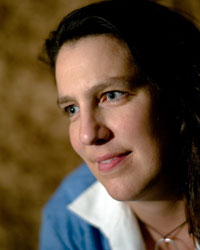
I’ve known Kaliya for over a year, and we haven’t exactly had the most positive relationship. All our interactions seemed to be arguments, and we never really got off onto the best foot.
So we met for the first time and the whiteboard got a fresh wipe. Kaliya is quite simply brilliant and we had some great chats. The best way I can categorise her is as a community organiser – she’s prevalent with things in the identity world as well as women in tech. She knows a lot of things, people and is doing awesome stuff that will be transforming the industry.
Having described three prominent women that already have a reputation (the above), I am now going to highlight three without one (or still developing). I am willing to put money on them that they will a Big Deal in the next decade, and the only thing stopping them is them not realising their potential.
Most likely to shake things up: Alisa Leonard-Hansen
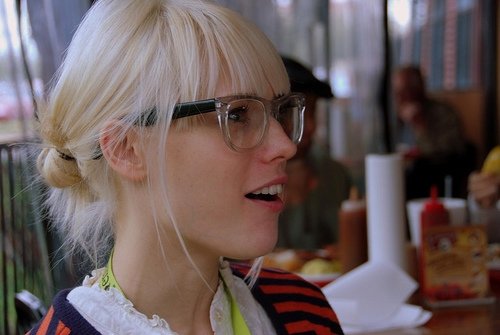
Alisa is an analyst and strategist that has somehow found herself working in marketing. And now, she’s determined to shake thing up – give her some time, and you’ll see how.
Another New Yorker, she understands upcoming trends better than most people. But I think what really slammed the door in making me realise she was the real deal, was the fact she knew about the origins of Hypertext. She has even read the Memex – the 1940s book that influenced people to create the technologies behind the Web. Now that I’ve revealed that to the world, I’m going to have to drop that as one my tests to sus out people – but no one has ever passed that test before. Look out for her – this chick is smart.
Best uncut diamond: Wicky Mendoza
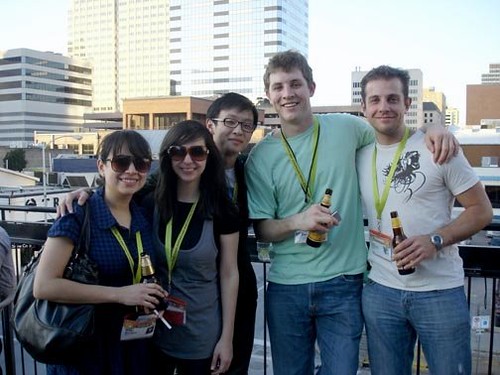
Wicky on the far left (me on the far right) + other quality friends we made at the conference whilst drunk as skunks
I was at a party at SXSW alone because the people I was meeting there didn’t end up making it. Wicky approached me out of the blue, and started talking to me. And as we talked and talked, she blew me away with what she’s done and the way she thinks. When people talk about uncut diamonds waiting to be discovered, Wicky should be the dictionary definition of that.
I don’t feel like I can share why I think Wicky has brilliant potential, as it’s not something easily communicated, especially when it’s someone still breaking their teeth in the industry. I suppose when I judge people (yep, all of you), there are certain personality traits I look out for, and she met those.
Someone needs to pull her out of Dallas and put her in the front and centre of a business, so she can grow as your business grows. You’ll thank me for it, trust me.
Best user of the English language: Sarah Townsend
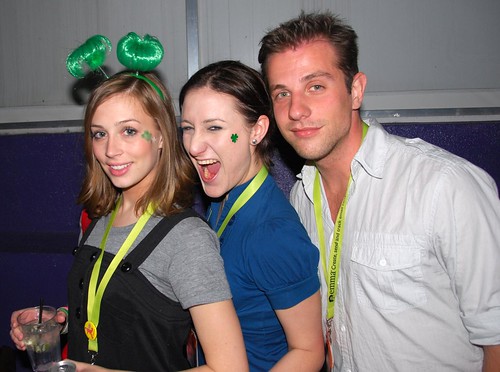
Sarah on the left, yours truly on the right
So if talking to people for over a year without having met them is weird, then how I know Sarah is even better. I met her at SXSW, in a conversation with two friends of hers about their blogs. Nice chat but I didn’t say much – I walked away in my drunken slumber, and that was that.
Not quite. A photo was taken of us during our chat which I stumbled on a week later. I said hi nice to meet you and before I knew it something like over 100 emails over the next week, some longer than this post, were exchanged between us.
So unlike the others, I didn’t sit down and have a real-world one-on-one conversation which gave me an insight into her, but I’ve learned enough to realise she’s got a lot potential. But again, it’s not up to me to determine whether she will reach that – just like Alisa and Wicky, as much as I can identify ability, it’s going to be up to her to realise it.
Ok, so my battery is about to die. I’ve made a commitment to myself to always talk-up good people I come across in life, purely for selfish reasons: it means other people can also become better people making my life more enjoyable! I haven’t exactly got much to gain from writing this as I already have relationships with the above and in selecting some people and not others probably does me more harm than good (blame the battery). But for those of you loyal enough to read my ramblings – hopefully you will try to connect with them because they are people worth connecting with.