As we were preparing for the upgrade of DataPortability Project’s website, we realised we needed to close off some of our legacy mailing lists…but we didn’t want to lose the hundreds of people already on these mailing lists. So we decide to export the emails and paste them into the new Google group as subscribers.
I then got this error message.
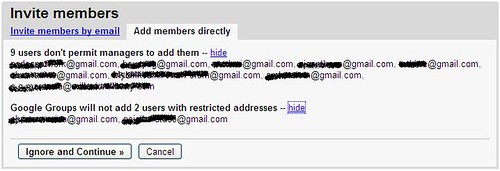
The has to be one of the best error messages I have ever seen. Yes I’m happy that I could port the data from a legacy system/group to a new one, using an open standard (CSV). Yes, I was impressed that the Google Groups team supports this functionality (who I am told is just one Google engineer and are completely understaffed). But what blew me away was the fact Google was able to recognise how to treat these emails.
These particular people have opted to not allow someone to reuse their e-mail, other than the intended purpose for which they submitted it (which was to be subscribed to this legacy Group). Google recognised that and told me I wasn’t allowed to do it as part of my batch add.
That’s Google respecting their users, while making life a hell of a lot easier for me as an administrator of these mailing lists.
I’m happy to be helped out like that, because I don’t want to step on any toes. And these people are happy, because they have control of the way their data is used. That’s what I call “Awesome”.

Too funny! And a great example of how things can and should be!!!!
You might infer the people have control of the way their data is used, but they don’t actually have any control, nor should they. Google respects its users, and infers their preference.
If you send me an e-mail, you don’t control its disclosure by me (because you don’t control me). The reason your e-mail isn’t disclosed (or your address sold to spam farmers) is because I have respect for you and your likely preference.
There is a big difference between controlling a correspondent and having confidence in them, that they will respect you and remain discrete with your confidences.
Admittedly, ‘having control over your data’ is very appealing as a concept (unless you’re the one subject to that control).
Compare the recent cases of people receiving harassing legal documents from less than scrupulous lawyers. They find that when they publish them on their blog to alert the public or invite discussion, that those same lawyers are then able to prosecute them for copyright infringement – for publishing their letters. That’s what having control over others’ communication looks like.
People tend not to publish each other’s correspondence, but this is a matter of respect, not because they are subject to the control of others (any legislation that grants such control is an unethical privilege).