Tag Archive for 'google'

One word explains the Google superbowl ad: Bing

Google, a company that used to pride itself on the fact it never had to advertise, put an ad in the mother-of-all advertising slots: during the Superbowl, the most expensive time you can advertise in television. And this was posted on the official Google blog by the CEO Eric Schmidt, a man that doesn’t all that often post to the company blog.

Why did it break tradition, with this cute emotional-brand-building ad? Because Google now has for the first time a real competitor, in the rising Bing – Microsoft’s rebranded search engine boosted by the $100 million Powerset acquisition. Bing’s search technology may still lag far behind, but it’s certainly ringing a bell on the marketing side and growing quite healthily as a result. And as well all know, the reason we search is less because we think it’s better technology, but more so because of the importance we place on the brand that we feel comfort in.

Google’s ad was cute. But capitalism is all about self-interest, and for the few million Google had to spend on this seemingly non-informative ad, what management are thinking is quite clear to me. That being, Google’s trying to revamp the emotional attachment we have with the world’s most loved brand. But more tellingly, from the very top, Google’s scared as hell and is now protecting what they know matters the most in the search engine wars: the emotional connection to a brand.

Facebook’s no longer a startup

Facebook pokeFacebook announced today that they became cash-flow positive in the last quarter. This is a big deal, and should be looked at in the broader context of the Internet\’s development and the economy’s resurgence.

The difference between a start-up and a growth company
There are four stages in the life-cycle of a business: start-up, growth, maturity, and decline.

In tech, we tend to obsess over the “start-up” – a culture that idolises small, nimble teams innovating every day. Bu there is a natural consequence of getting better, bigger, and more dominant in a market – you become a big company. And big company’s can do a lot more (and less) than when they could as startup’s.

Without going too much into the difference between the cycles, it’s worth mentioning that a functional definition to differentiate a “startup” business from a “growth” business is its financial performance. Meaning, a startup can be one who has revenues and expenses – but the revenues don’t tend to cover the operating costs of a business. A growth business on the other hand, is experiencing the same craziness of a start-up – but is now self-supporting because its revenues can over its costs.

This makes a big difference in a company, lest of all longer term sustainability. When a business is cashflow negative, it risks going bankrupt and management’s attention can be distracted by attempts to raise money. But at least now with Facebook finally going cash-flow positive, it has one less thing to worry about and can now grow with a focus less on survival and more on dominance.
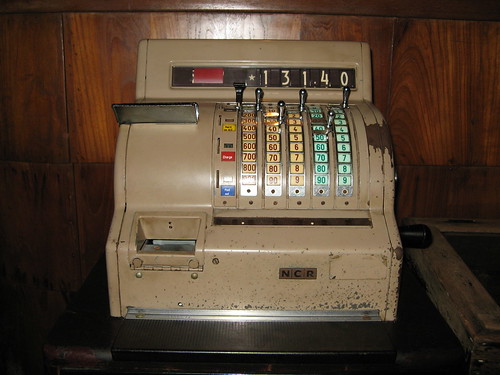
Cash register

Looking at history
Several years after the Dot Com bubble, I remember reading an article by a switched on journalist. He was talking about the sudden growth of Google, and how Google could potentially bring the tech industry back from the ashes. He was right.

Google has created a lot of innovative products, but its existence has had two very important impacts on the Internet\’s development.

First of all, there was adsense – a innovative new concept in advertising that millions of websites around the world could participate in. Google provided the web a new revenue model that has supported millions of content creators, utility providers, and marketplaces powered by the Internet.

Secondly, Google created a new exit model. Startup’s now had a new hungry acquisition machine, giving startups more opportunities to get funded as Venture Capitalists no longer relied on an IPO to make their money – which had now been effectively killed thanks to the over-engineered requirements of Sarbanes Oxley.

Why Facebook going cashflow positive is a big deal
Facebook is doing what Google did, and it’s money and innovation will drive the industry to a new level. Better still, its long been regarded that technology is what helps economies achieve growth again, and so the growth of Facebook will not only see a rebuilding of the web economy but also of the American one. The multiplier effect of Facebook funding the ecosystem will be huge.

And just like Google, Facebook will likely be pioneering a new breed of advertising network that benefits the entire Internet. And even if it fails in doing that, its cash will at least fund the next hype cycle of the web.

So mark this day as when the nuclear winter has ended – it’s spring time boys and girls. We my not have a word like Web2.0 to describe the current state of the Internets evolution, but whatever its called, that era has now begun.
Google Wave will take a generation

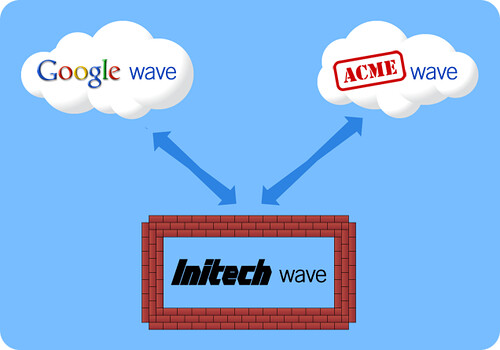
google wave logoChris Saad used to ask me questions about tech in enterprise due to my history (I’ve got the battle scars rolling out web2.0 at PwC), but he asked me after he wrote this post. So instead of telling him he’s wrong by email (ironic given the topic), I’m going to shame him to the world!

Why Google Wave will take over ten years to turn into a trending wave
As I previously wrote when the news of Google’s new technology was announced, there is a hidden detail Google hasn’t announced to the world: it requires massive computational power to pull off. It doesn’t take a brain to realise it either – anyone thats used a bloated Instant Messenger (like Lotus Same Time) probably understands this. All that rich media, group chat, real time – Jesus, how many fans are we going to need now to blow the steam generated by our computer processors? Mozilla pioneered tabbed browsing – and it’s still trying to pioneer on the same idea – from your computer crashing when you have more than a few tabs open!

Don’t get me wrong, Google Wave is phenomenal. But it’s only the beginning. The fact Google has opened this up to the world is a good thing. But we need to be realistic, because even if this technology is distributed (like how email is), the question I want to know is how many users can one server support? I’d be surprised at these early stages if it’s more than a dozen (the demo itself showed there’s still a lot of work to be done). Do I have inside knowledge? No – just common sense and experience with every other technology I’ve used to date.

Why Google Wave won’t hit the enterprise in the next 12 months
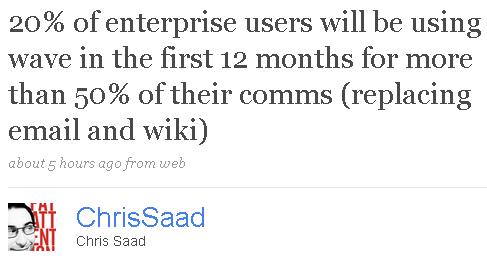
Now to the point where Saad is *really* wrong. “20% of enterprise users will be using wave in the first 12 months for more than 50% of their comms (replacing email and wiki)“.

chris saad google wave

Yeah right. It’s going to take at least three years, with a stable and mature technology, for this to work. Email sucks, but it also works. IT departments, especially in this economy, are not going to try a new form of communication that’s half working and is not a mass adopted technology (wiki’s are a new thing – there’s a cultural battle still being fought within enterprises).

The real time nature potentially might even scare communications departments. Entire divisions exist in firms like mine, to control the message sent to employees. If you are revealing a message before the final message has been crafted, you’ve given away control to that message – the process now becomes just as important as the final message. I understand this functionality can be turned off, but I’m raising it to highlight how enterprises think.

Google Wave rocks
Again, don’t get me wrong. Google Wave blows my mind. But let’s be realistic here – big ideas take time. It took a while for Google the search engine to domiante. Heck, Gmail has taken nearly a decade to get to the point of being called dominant. And you can fix bugs, deploy software, and roll out sales teams – but sometimes with big ideas, it’s a generational thing.

Wave will dominate our world communications – one day. But not for a while.